Skip to content

Open to engineering roles

Dhimy JeanFull-stack software engineer building reliable applications and data-driven systems.

I build web applications, APIs, and AI-powered tools with React, Node.js, PostgreSQL, and Python. My work connects thoughtful user experiences with dependable backend systems.

Education and programs

Education

  • Brooklyn CollegeB.S. Computer Science · in progress
  • BMCC, CUNYA.S. Computer Science · Dean's List · Phi Theta Kappa

Programs

  • CodePathAI Engineering, Advanced Web Development
  • NYC Tech Talent PipelineSoftware Engineering Residency
  • BMCC AI Innovation ChallengeBridgeAI · Team AlfaTech · 2026

Selected Work

Featured Work

Full-stack products and machine learning work, with live demos and source where the repositories are public.

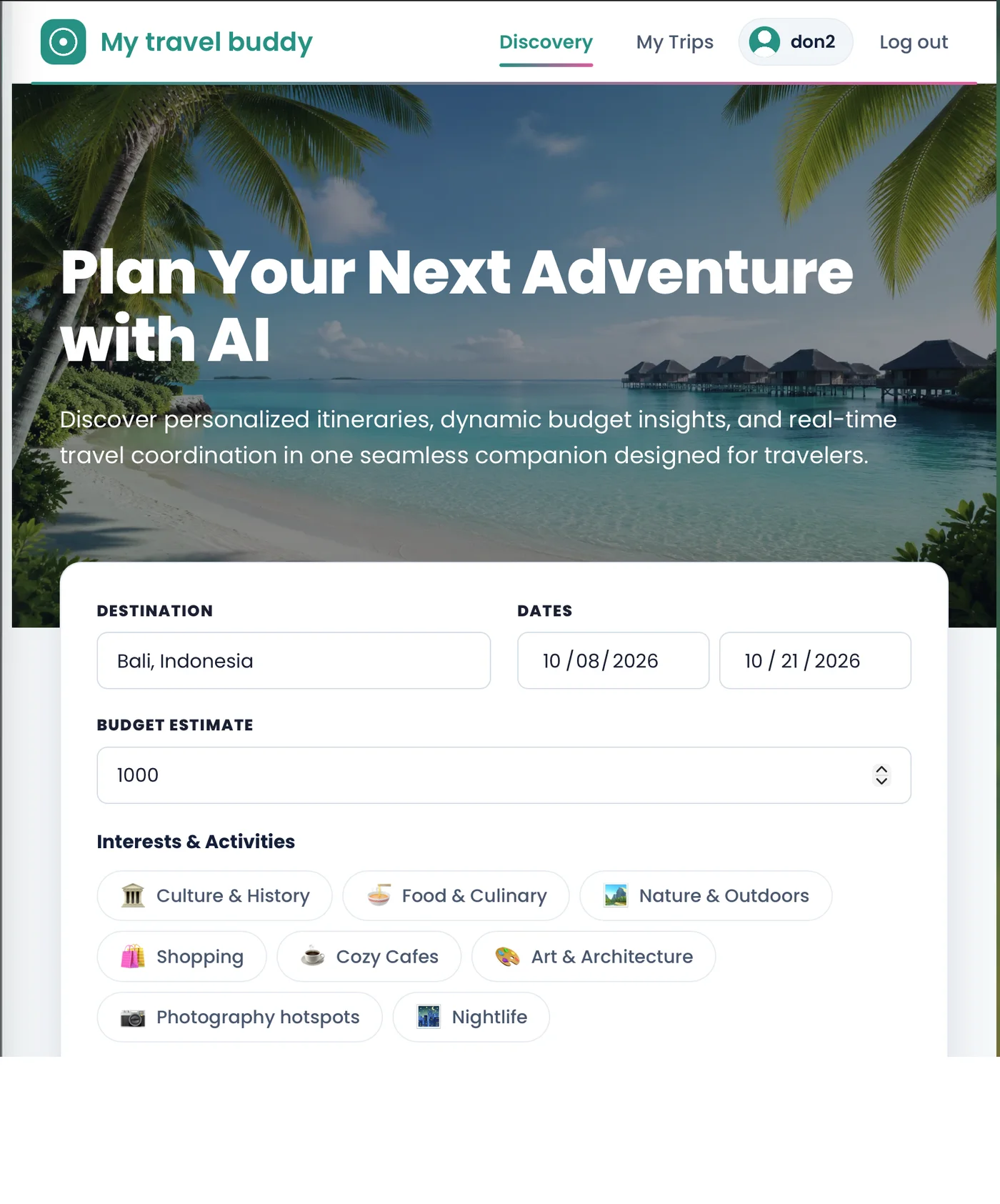
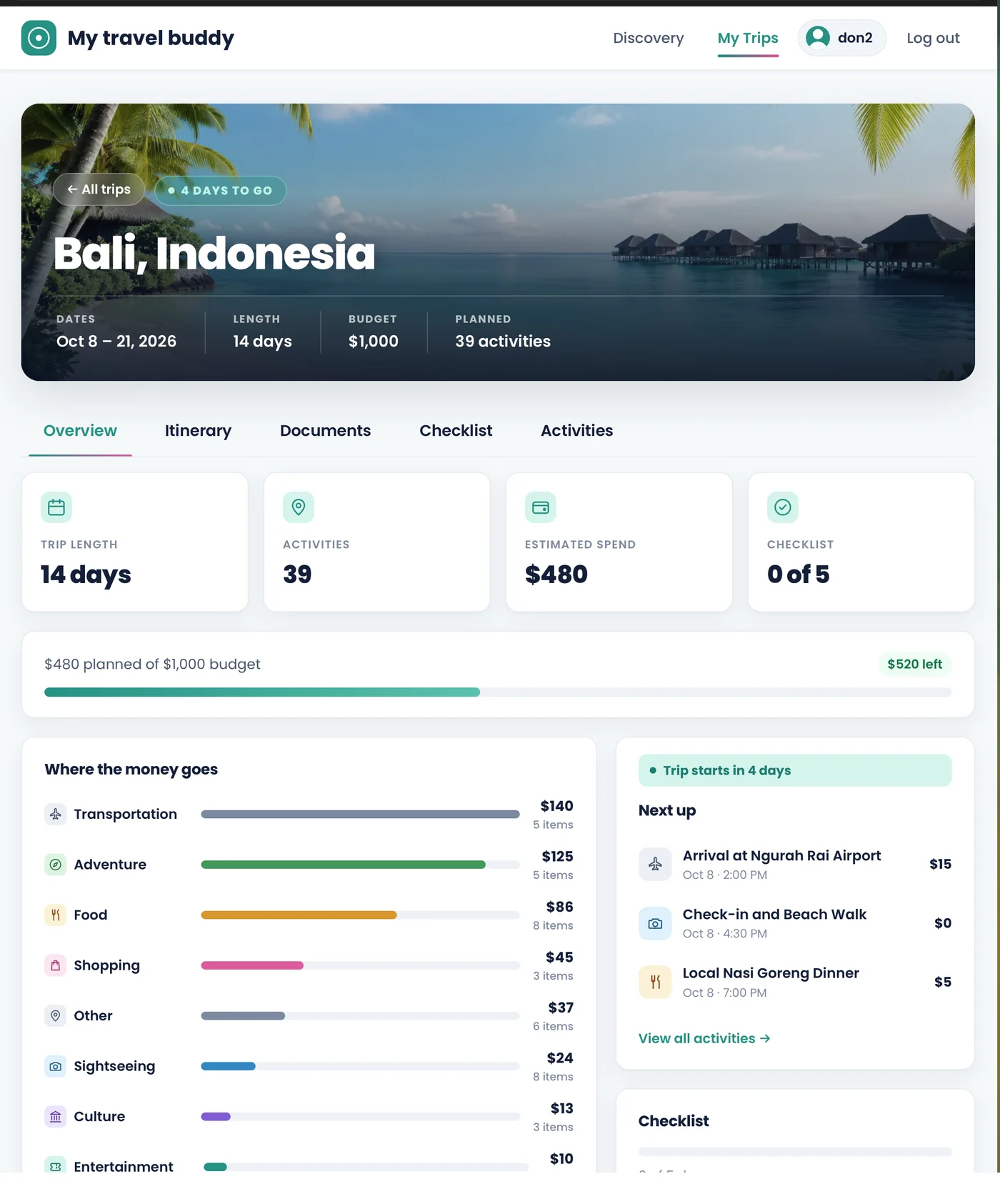
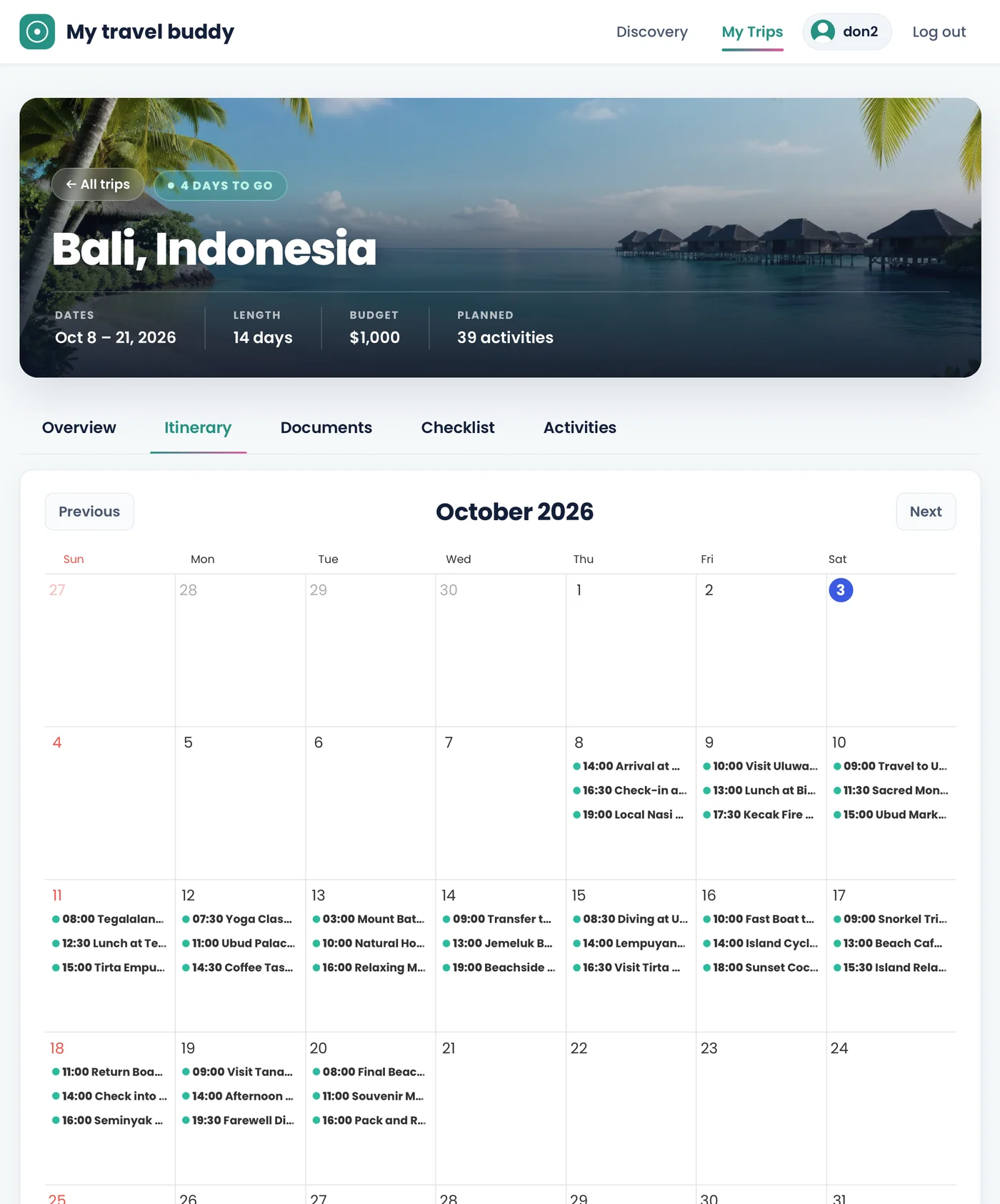
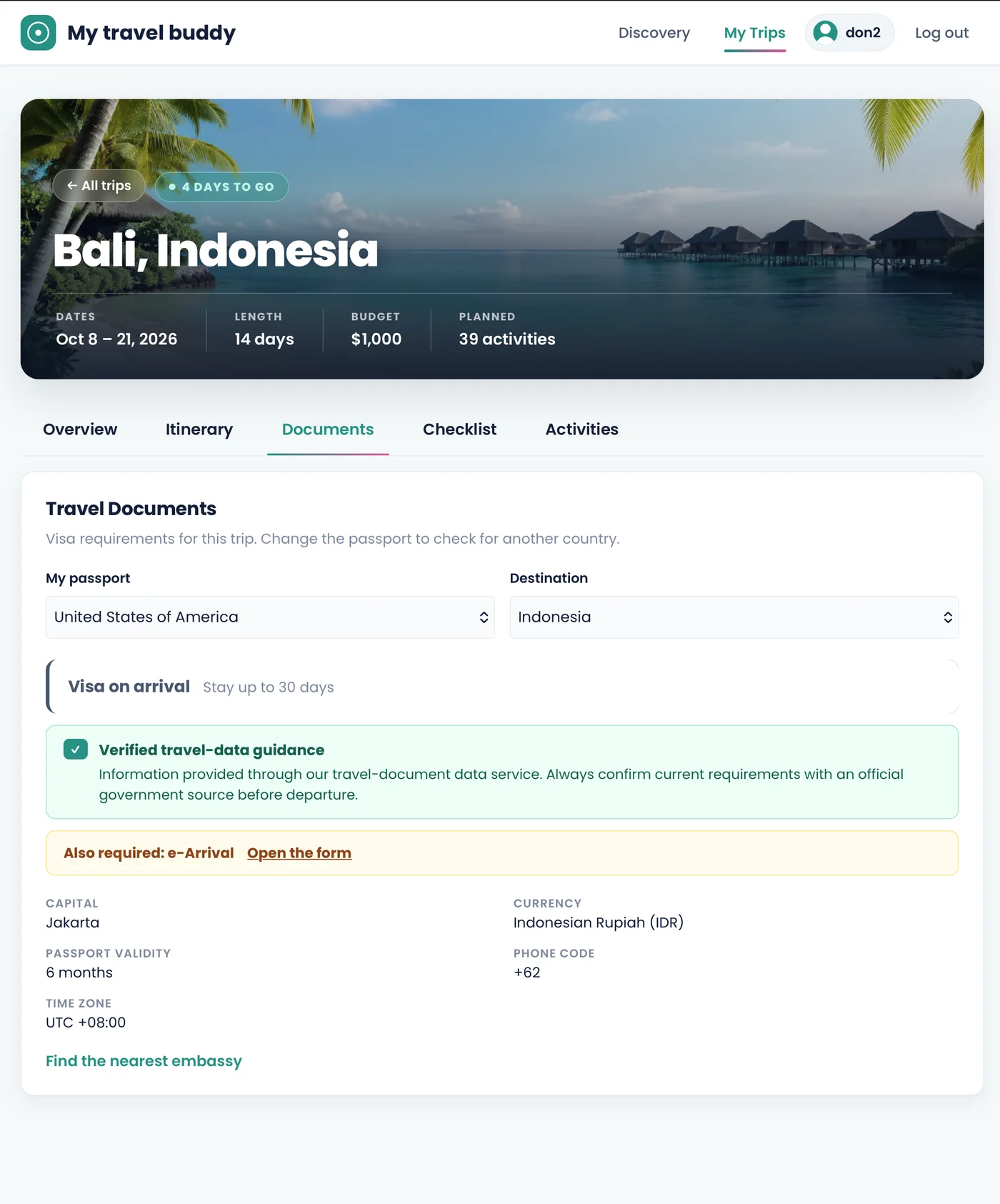
The My Travel Buddy discovery page. A hero reads "Plan Your Next Adventure with AI" over a beach. Below it a form holds a destination of Bali, Indonesia, dates of 8 to 21 October 2026 and a budget estimate of 1000, with eight interest chips to choose from: culture and history, food and culinary, nature and outdoors, shopping, cozy cafes, art and architecture, photography hotspots and nightlife.

Screen 1 of 4: Planning a trip

LiveTTP Capstone

My Travel Buddy

An AI travel planner that brings itineraries, visa checks, activities, packing lists and trip management into one app.

My contribution: Developed and secured 20+ REST API endpoints and contributed across the React client and the Express and PostgreSQL server of this team capstone.

  • React 19
  • Vite
  • React Router
  • Node.js
  • Express
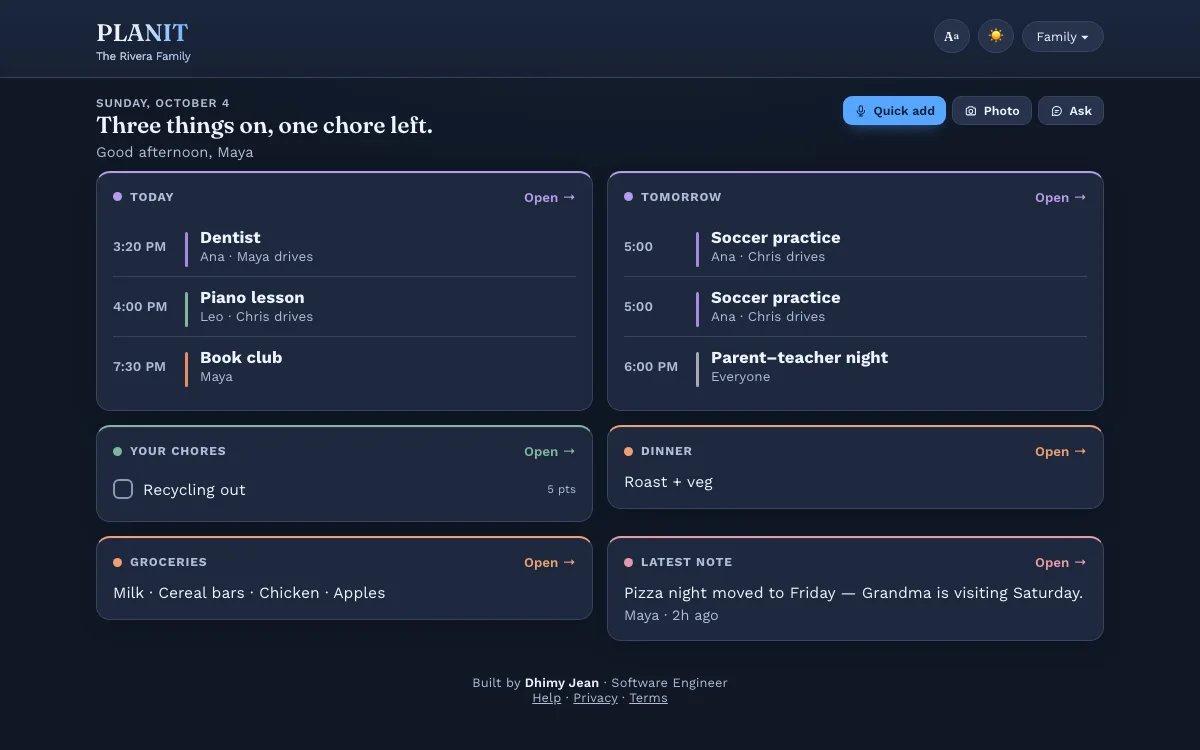
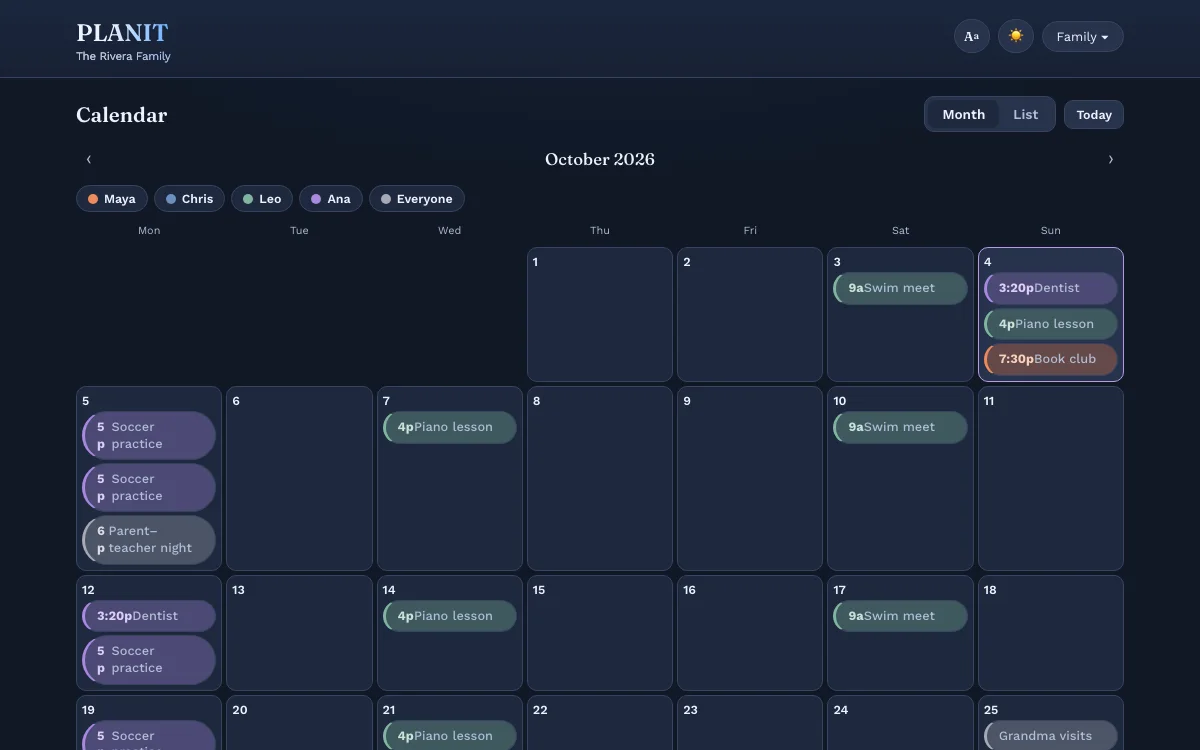
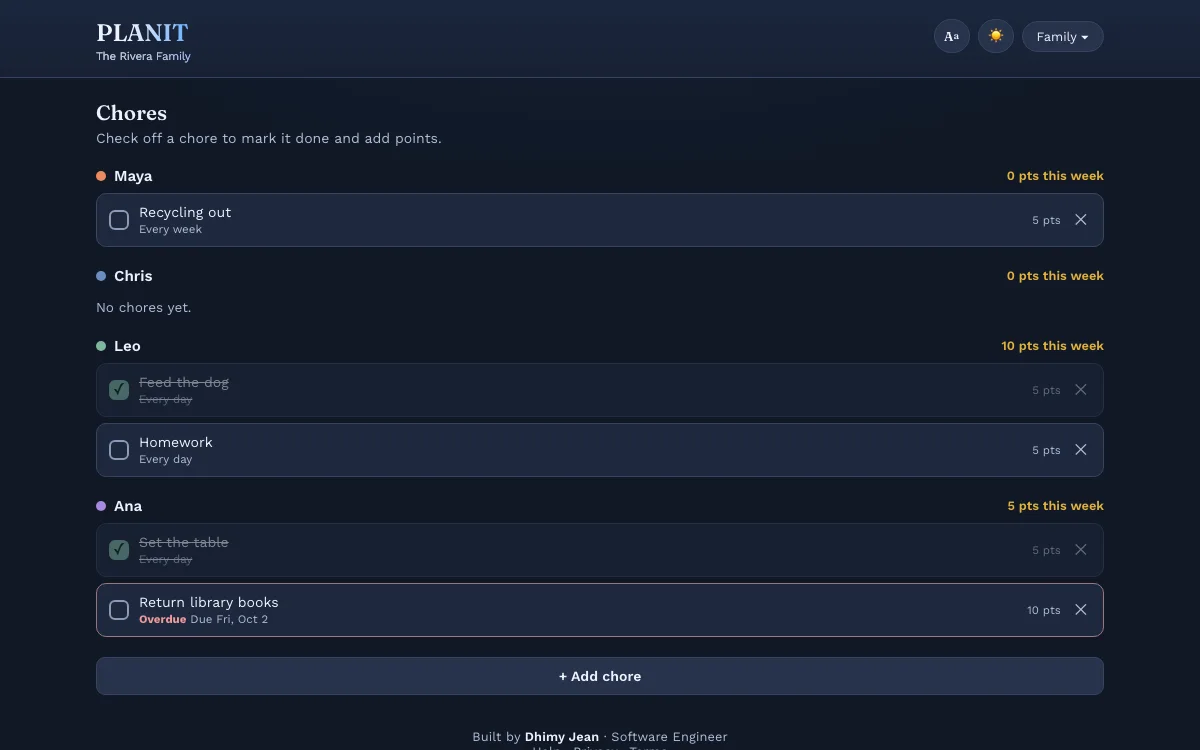
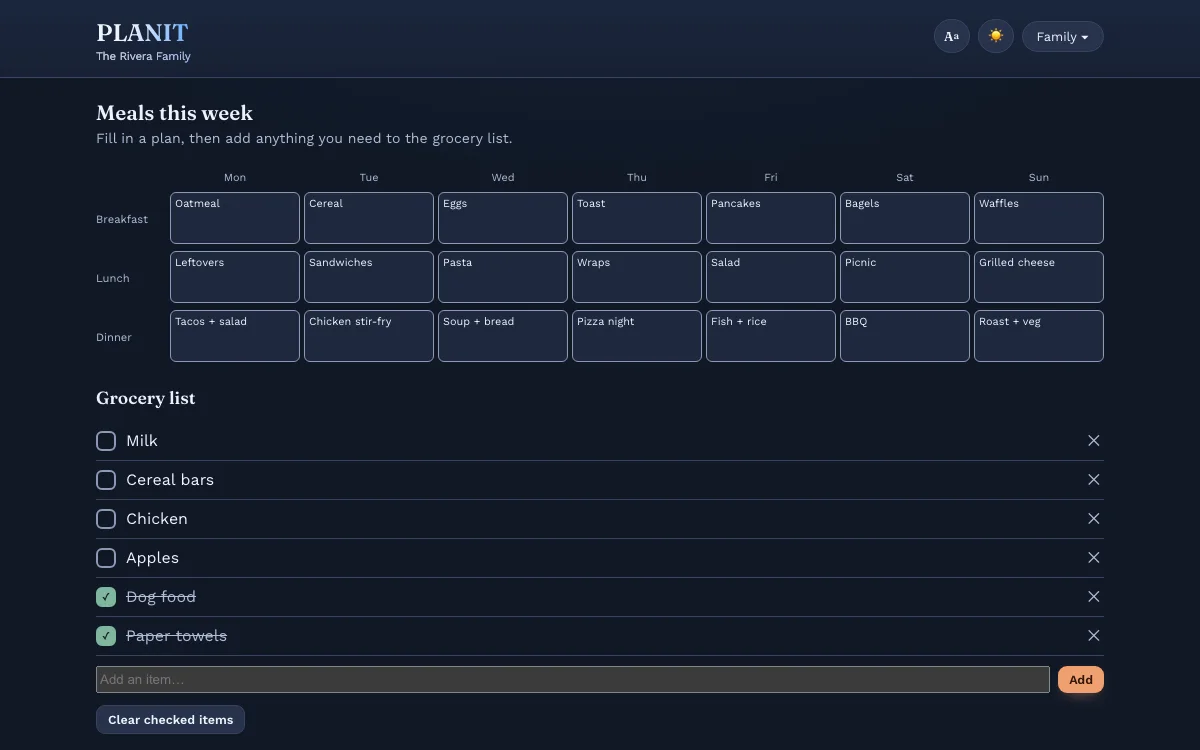
The PLANIT home screen for a household, greeting Maya with "Three things on, one chore left" above cards for today's and tomorrow's appointments, her remaining chore, tonight's dinner, the grocery list and the latest family note, with quick-add, photo and ask buttons at the top and a tab bar along the bottom.

Screen 1 of 5: Today

LiveFamily Planner

PLANIT

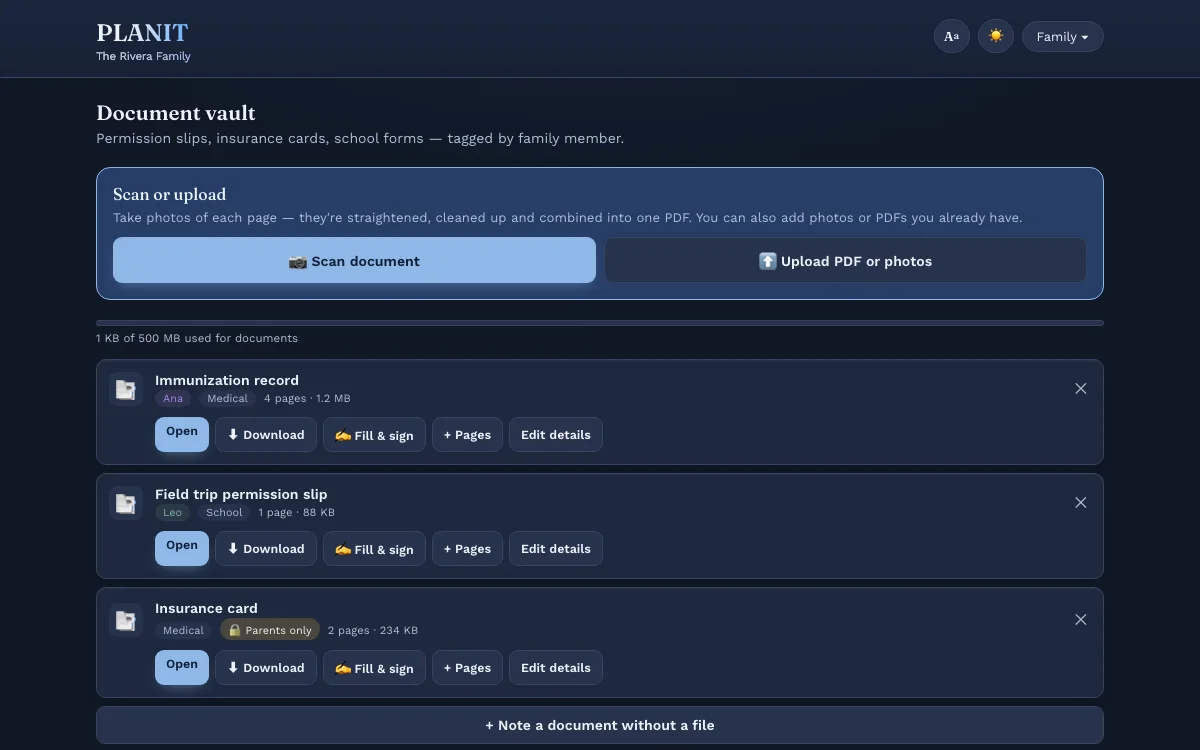
A family planner that puts the calendar, chores, meals, documents, notes and shared money behind one login.

My contribution: Built it solo: the schema, the row-level security policies that keep each family's data separate, the client, offline behavior and release.

  • JavaScript
  • Vite
  • Supabase
  • PostgreSQL
  • Row-Level Security
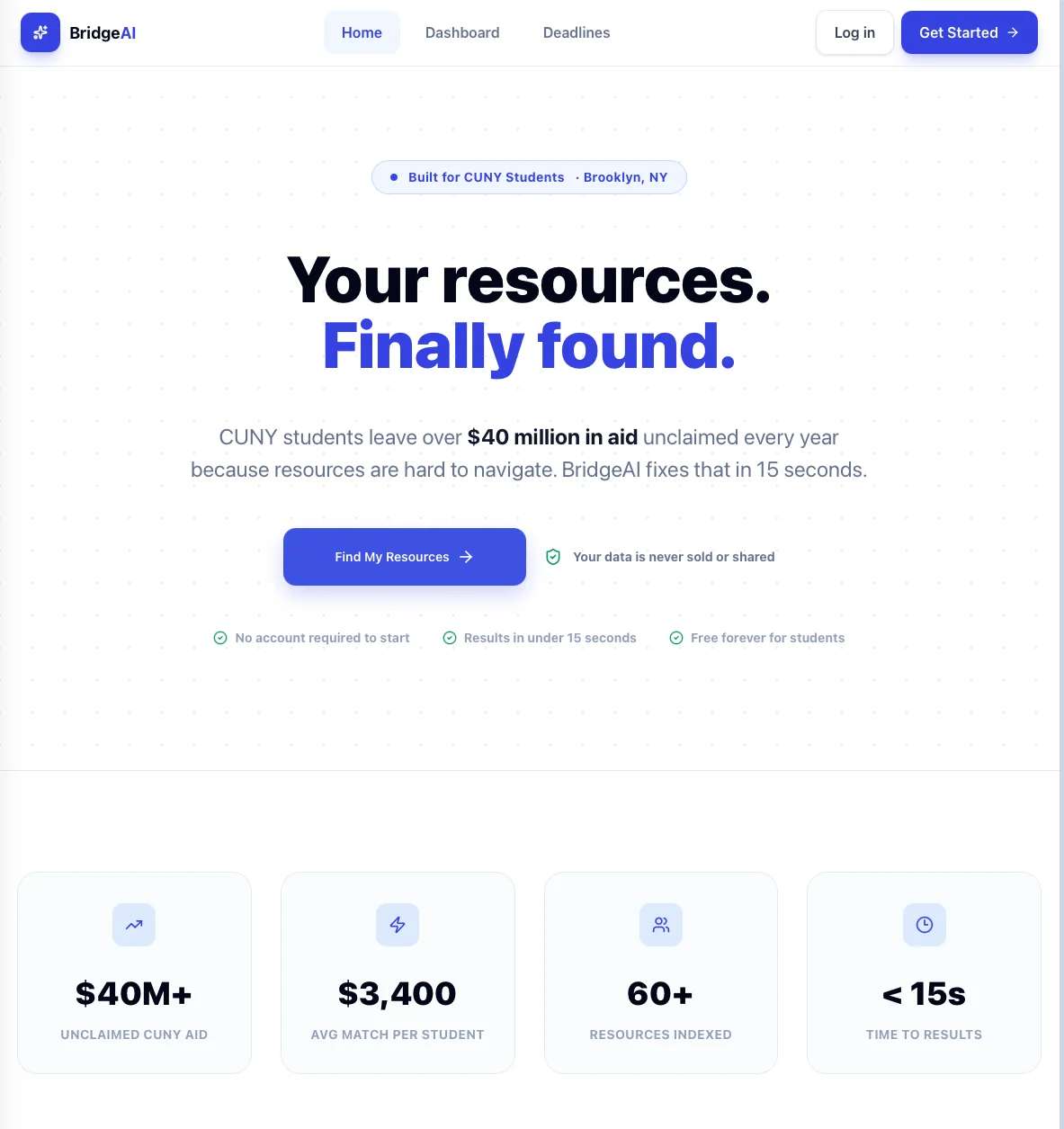
The BridgeAI home page. A headline reads "Your resources. Finally found.", above a line explaining that CUNY students leave over $40 million in aid unclaimed each year because the programs are hard to navigate. A "Find My Resources" button sits beside the note that the data is never sold or shared, and below are four figures: unclaimed aid, average match per student, resources indexed, and time to results.

Screen 1 of 2: Home page

LiveBMCC Hackathon

BridgeAI

Helps CUNY students find the aid, benefits, scholarships and internships they may qualify for, ranked by fit.

My contribution: Built the deterministic eligibility engine that runs before any AI is consulted, the server-side AI workflows, and PostgreSQL persistence with authentication and rate limiting.

  • React
  • Node.js
  • Express.js
  • PostgreSQL
  • Sequelize

Internship results

Walkspan ML internship

Figures from the project's verification report, available on request. They are grouped by what kind of result they are: two correct how the model was evaluated, and two improve the service and tests around it.

Evaluation corrections

The model was not changed. Fixing the label decoder corrected how it was scored.

Verified IoU
42.5%Verified IoUup from 34.4% after correcting label decoding
Annotations affected
19%Annotations affecteddecoded as blank by the old decoder while 78 passing tests missed it

Engineering improvements

Changes to the test suite and the service, separate from the model.

Automated tests
141Automated testsup from 66
Health-check latency
1 msHealth-check latencydown from 3.2 s, worst case under load

Limitations. Research prototype evaluated on 18 held-out images, using a strict overlap metric on a dataset where crack pixels are 1.6% of the total. Retraining on the corrected labels changed IoU by +0.0082, within the noise at this sample size, so I make no model-improvement claim. Not intended for safety-critical decision-making.

Full methodology in the case study →

Stack

What I build with

The tools and technologies I use, organized by role. Explore my skills page to see how I’ve applied each one in my projects.

  • Frontend

    • JavaScript
    • TypeScript
    • React
    • Next.js
    • HTML/CSS
    • Tailwind CSS
  • Backend

    • Node.js
    • Express.js
    • REST APIs
    • Python
    • FastAPI
  • Data

    • PostgreSQL
    • SQL
    • Supabase
  • AI & Machine Learning

    • PyTorch
    • Gemini API
    • Claude API
  • Development, Testing & Deployment

    • Git/GitHub
    • Docker
    • pytest
    • GitHub Actions
    • Vercel
    • Render

Explore my skills →

Approach

How I build

Three principles I apply, with the projects where I applied them.

  1. Enforce safeguards in the architecture

    Enforce important safeguards in the database or the architecture, so they hold whatever the application code does.

    Examples:PLANITPDF Workspace

  2. Let rules decide and AI assist

    Leave the decisions that affect people to rules that can be read and tested, and use AI to rank, explain and draft.

    Examples:BridgeAITarn Wellness

  3. Test beyond the happy path

    Check the data and the assumptions as well as the suite, so defects that every test missed still get found.

    Example:Walkspan ML

All five principles, with the evidence →

Let's Connect

Open to engineering roles

I'm looking for full-stack, backend, software engineering, and data-focused roles. Happy to walk through any project in detail, including the private ones.